

Hypothermia First Aid

Hypothermia occurs when the body’s internal temperature drops below 35 degrees Celsius.
Hypothermia can occur in any situation wherein the body loses more heat than it can generate.
In saying that, hypothermia generally occurs when a person experiences prolonged exposure to cold weather conditions or cold water.
It is important to know first aid for hypothermia, as severe hypothermia can result in multiple organ failure and even death.
The average normal body temperature is generally accepted as 37 degrees Celsius. There is a range either side of this, of about half a degree, that can be perfectly normal for each individual - each of our bodies operates slightly differently, so our 'ideal' temperature might be ever so slightly different as well. Our core temperature also varies throughout the day, depending on our activities. But 37 degrees Celsius is the clinical, or medical, baseline that clinicians and doctors use as the average to determine if a person might have a fever or be too cold.
At this temperature, our body is warm enough to prevent fungal infections, but not so warm that we need to eat constantly to maintain our metabolism. This is also the temperature that our enzymes (biological catalysts that help speed up the processes within our cells) work best at.
Our body produces heat through metabolic processes in the muscles and organs, when food is broken down to support our growth, repair, and energy needs.
The hypothalamus, the part of the brain that links the endocrine and nervous systems, works alongside other parts of the body’s thermoregulation system to maintain this optimal temperature.
However, when a person is in an environment that has a lower temperature than their body, they begin losing heat through the skin via conduction, convection, radiation, and evaporation.
These processes generally occur faster in cold environments or inclement weather, as skin loses heat more quickly when exposed to wind or moisture.
As the person’s body temperature drops, the muscles and organs that produce the most heat, such as the heart and liver, cease functioning normally to preserve heat for the brain.
As such, if a person suffering from hypothermia is not given immediate medical attention, their heart and respiratory systems can falter to the point of death.
Check out the video below for more information on how to provide first aid for hypothermia:
For more information on how to prevent, identify, and manage symptoms, head to a first aid course near you.
The following first aid courses may be pertinent to you:
June 25, 2022
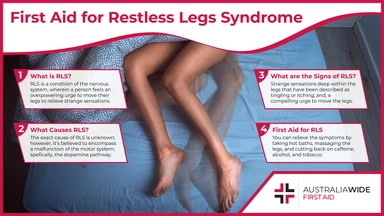
Restless Legs Syndrome (RLS) is a nervous system disorder. People living with RLS experience strange sensations in their legs, and an uncontrollable urge to move their legs. It is important to know first aid for RLS, as it can lead to sleep deprivation.
June 23, 2022
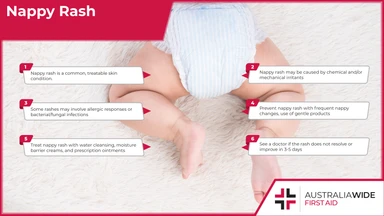
Nappy rash is a form of dermatitis that occurs when the skin is exposed to moisture for prolonged periods of time. Nappy rash can be very uncomfortable for children and even cause infection. As such, it is important to know first aid for nappy rash.
June 21, 2022
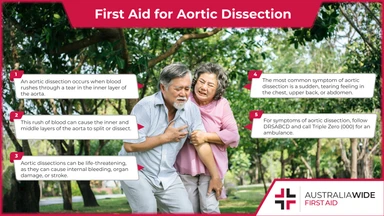
An aortic dissection occurs when blood rushes through a tear in the inner layer of the aorta. This can cause the inner layer to split from the middle layer, and result in aortic rupture. As such, it is important to know first aid for aortic dissection.