

All About the Rough Scaled Snake

There are roughly 77 Australian elapid snake species - terrestrial snakes that have a sophisticated venom delivery system and fixed fangs in the front of their upper jaw.
The Rough scaled snake is one such example. As well as being dangerously venomous, these snakes have the unique ability to climb, hunt, and shelter in trees and low vegetation.
It is important to be wary of the Rough scaled snake. Though they are shy and generally found in undisturbed habitat, their neurotoxic venom has been responsible for at least one human fatality.
In this article, we will help you become more familiar with the Rough scaled snake's behaviour and identifying characteristics, and what to do if you are bitten by one.
You can also enrol in our First Aid and Child Care First Aid courses to learn about the practicalities of treating different snake bites.
The Rough scaled snake (Tropidechis carinatus) generally has the following characteristics:
The Rough scaled snake is often misidentified with the non-venomous Keelback (Tropidonophis mairii) and the Tiger snake (Notechis scutatus). However, Keelbacks tend to have a pink flush on the sides of their underbelly.
The Rough scaled snake prefers moist habitats, such as:
They occur in two widely separated populations along Australia's eastern coast:
The Rough scaled snake is active during the day and at night, when they prey on and ambush a variety of vertebrates, including mammals, lizards, and frogs.
Though they generally forage on the ground, they have been known to climb to heights of at least 5m to hunt and take shelter.
Additionally, females give birth to live young, usually in the late summer.
Like the Australian eastern brown and similar species, the Rough scaled snake is shy, nervous, and will readily bite if cornered.
Their venom is highly toxic and can destroy nerve cells, red blood cells, and other living cells.
Their bites have been responsible for at least one human fatality, and several other severe cases of envenomation.

If bitten by a Rough scaled snake, you should follow DRSABCD, call Triple Zero (000) for an ambulance, and apply the Pressure Immobilisation Technique.
More information can be found in our article on identifying and treating bites from some of Australia's deadliest snake species.
If you would like to learn more about treating a bite from a Rough scaled snake, a brown to olive coloured snake found across parts of the Australian east coast, book a First Aid or Child Care First Aid course at a location near you today.
December 21, 2022
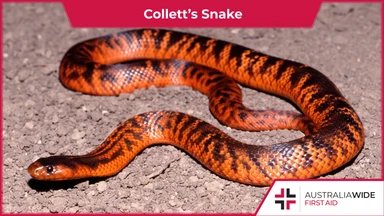
Distributed in parts of western and central Queensland, Collett's Snake has highly toxic venom that can cause abdominal pain, muscle necrosis, and even renal failure.
December 19, 2022
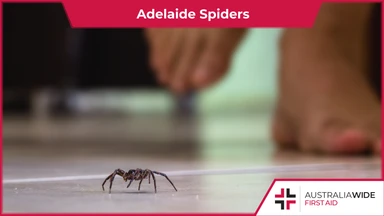
There are a host of spider species common in Adelaide homes and backyards. Though these spiders mostly stick to themselves, they can deliver excruciating bites that have killed people in the past.
December 16, 2022
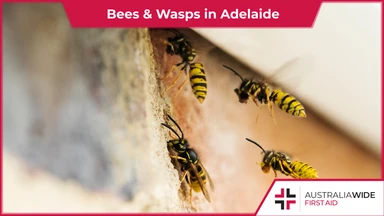
There are a variety of bees & wasps in Adelaide, all of which are particularly active during the warmer summer months. When bees and wasps infest homes, they can become territorial and attack in swarms.